
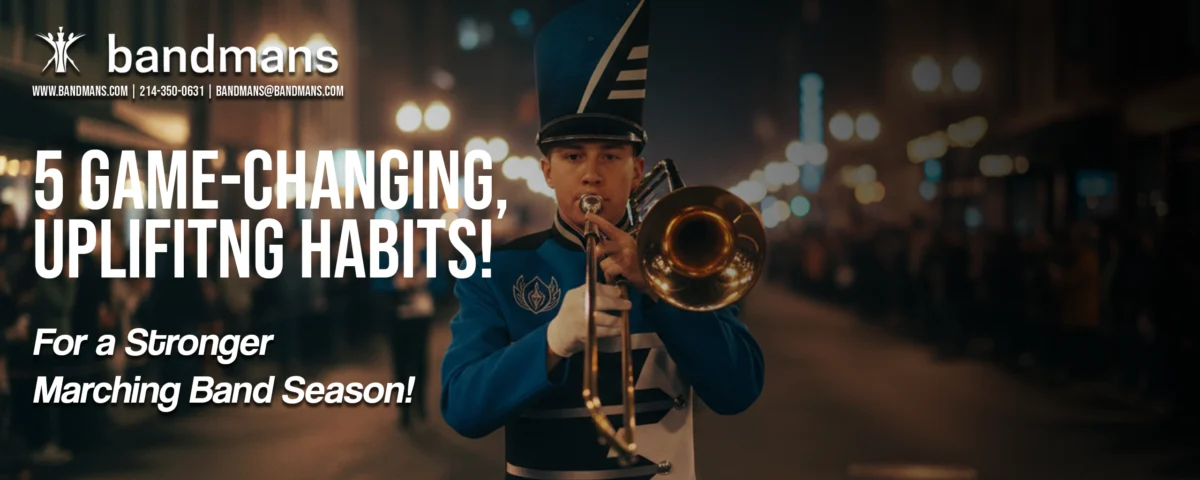
5 Game-Changing, Uplifting Marching Band Habits for a Stronger Season
Implementing effective Marching Band Habits can transform your rehearsals and overall performance.
Marching band seasons don’t fall apart because people “don’t care.” They fall apart because the day-to-day gets chaotic—rehearsals drag, focus slips, heat hits hard, and everyone starts running on vibes instead of a plan. The good news? You don’t need a total program overhaul to feel a massive difference. You just need a few uplifting, game-changing habits that make your rehearsals tighter, your culture healthier, and your show cleaner—fast.
By adopting key Marching Band Habits, you can enhance focus and unity among members.
To further enhance the rehearsal experience, consider incorporating team-building exercises that foster camaraderie among band members. Activities such as icebreaker games, trust falls, or even group discussions about personal goals within the band can significantly strengthen relationships. When students feel connected, they are more likely to support one another, leading to a more cohesive unit on and off the field.
Engaging in Marching Band Habits like team-building exercises strengthens the band culture.
1) Start rehearsal with one repeatable routine
A consistent routine calms the room, saves time, and gets everyone locked in quicker—especially when the season gets stressful. NAfME highlights how purposeful routines reduce chaos and help focus attention.
Try this: same 5-minute flow every day (attendance → stretch/breath → basics → first rep).
Establishing a warm-up routine is one of the essential Marching Band Habits for success.
Additionally, the importance of warm-ups cannot be overstated. Implementing a structured warm-up routine that targets both physical and musical aspects can enhance performance. This might include physical stretches to prevent injury, breathing exercises to improve lung capacity, and technical exercises tailored to the specific challenges of the repertoire. A well-thought-out warm-up can set the tone for a productive rehearsal.
2) Make every rep have one clear purpose
Incorporating a feedback loop into rehearsals can also significantly boost morale. Encourage students to offer constructive feedback to one another, fostering an environment where everyone’s voice is valued. This not only promotes ownership of the music but also helps students develop critical listening skills that are vital for their growth as musicians.
These Marching Band Habits ensure each rehearsal is purposeful and productive.
“Run it again” isn’t a strategy. Pick one target: feet timing, releases, posture, interval control, horn angles—then rep with intention. Your students will feel progress sooner, which boosts buy-in.
3) Treat morale like a rehearsal skill
Motivation isn’t random—it’s built. NAfME notes that setting a respectful tone, creating belonging, and giving students real ownership strengthens commitment.
Try this: rotate tiny leadership roles (section rep leader, form-check captain, reset caller).
Incorporating these Marching Band Habits can significantly enhance student motivation.
4) Use “stand moments” to make the show read cleaner
Creating dynamic stand moments can involve choreographed interactions among band members. Think about how the visual aspect of the performance can enhance the auditory experience. By allowing students to explore movement in their formations, they can find creative ways to express the music physically, which can lead to a more engaging performance for both the performers and the audience.
Dynamic stand moments are crucial Marching Band Habits that improve audience engagement.
The crowd reads big pictures better than constant motion. Build in intentional snapshots where the band/guard “hits” and lets the moment land.
5) Heat safety is performance safety — plan it, don’t wing it
Early-season rehearsals can put marching band students at real risk, and NFHS explicitly includes marching band in heat illness prevention guidance.
Try this:
ramp intensity gradually (acclimatization)
schedule water/shade breaks as default, not “if needed”
shorten chunks during peak heat
make sure the adults have a clear prevention + response plan
Consider also implementing a hydration education segment during rehearsals. Teaching students about the signs of dehydration and the importance of maintaining proper fluid intake can empower them to take responsibility for their health. This knowledge not only aids in heat safety but also fosters a culture of awareness and care within the band.
If you only change one thing this week, make it this: run your program like a system, not a scramble. These five habits don’t require more time, more money, or a “perfect” group — they just create structure that helps everyone win. When rehearsals feel organized and achievable, students stay bought in, leaders step up, and your show gets cleaner almost automatically because the process is finally consistent. Start small, stay consistent, and watch how fast the momentum builds.
Lastly, a focus on positive reinforcement can catalyze a shift in group dynamics. Celebrating small victories, whether it’s nailing a challenging passage or improving as a section, can motivate students to strive for excellence. Create a system of recognition that highlights individual and group achievements, making everyone feel like an integral part of the success.
Transform Your Marching Band Experience with Bandmans Custom Uniforms
Explore our custom marching band uniforms designed to enhance your Marching Band Habits with style and performance.
Additional Resources & External Links
Consider additional resources that align with effective Marching Band Habits.
NAfME — rehearsal routines that reduce chaos & save time: https://nafme.org/blog/make-it-stick-implement-rehearsal-routines/
NAfME — classroom/rehearsal routines + community motivation: https://nafme.org/blog/a-purposeful-and-passionate-plan-for-managing-the-music-classroom/
NAfME — motivating your ensemble (building positive energy): https://nafme.org/blog/motivating-your-ensemble-ignite-spark/
NFHS — prevent heat illness in fall sports and marching band: https://nfhs.org/stories/as-practices-begin-for-fall-sports-and-marching-band-steps-must-be-taken-to-prevent-heat-illness
NFHS — heat illness prevention for marching band: https://nfhs.org/stories/heat-illness-prevention-keep-the-marching-band-playing
These links provide insights into various Marching Band Habits and practices.